16 Aug 2026
Instant Banking Mechanics Driving Extended Mobile Live Dealer Play and Progressive Accumulations
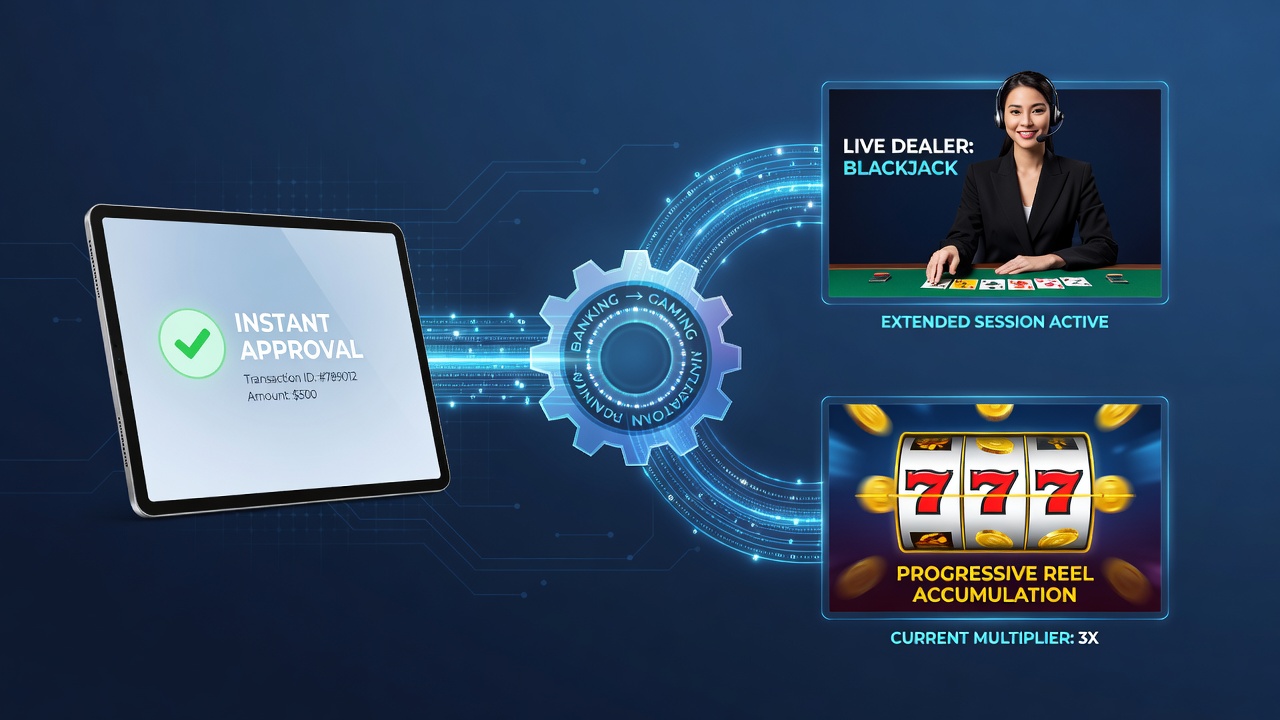
Instant banking approvals operate through secure application programming interfaces that connect financial institutions directly to casino platforms, allowing transaction confirmations in seconds rather than minutes or hours. These rapid verifications eliminate the traditional lag between deposit initiation and fund availability, which in turn permits players to remain engaged without interruption across multiple game types on portable devices. Data from payment processors indicates that approval times under ten seconds correlate with session lengths extending beyond the industry average of forty-five minutes, particularly in environments featuring live dealer interactions and accumulating reel systems.
Technical Pathways from Approval to Prolonged Engagement
Real-time authorization protocols rely on encrypted token exchanges between banks, payment gateways, and operator servers, a process that researchers at the University of Nevada, Reno have documented in studies examining mobile transaction flows. Once approval registers, the casino account balance updates immediately, triggering automatic session continuity features such as persistent login states and queued game entries. Observers note that this seamless handoff reduces player drop-off rates during the critical first three minutes of activity, a period when many sessions historically terminated due to funding delays. In August 2026, regulatory filings from several North American jurisdictions recorded a measurable uptick in average mobile session duration following widespread adoption of open-banking standards, with figures showing increases between twelve and eighteen percent in markets where instant approvals became standard.
Live Dealer Sessions and Continuous Reel Progression
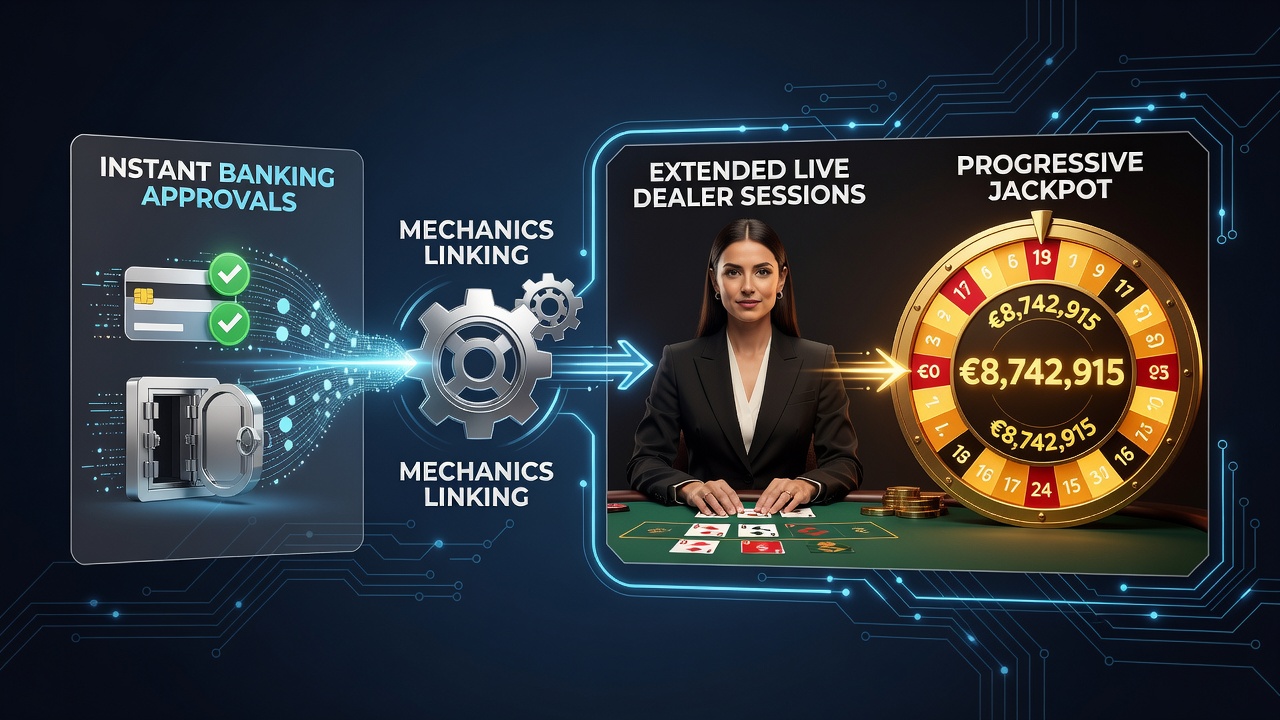
Live dealer environments require sustained connectivity because table games operate on fixed schedules and participant counts, while progressive reel mechanics accumulate contributions across networked machines in real time. When instant banking removes the friction of re-funding, players maintain their positions at virtual tables and continue feeding credits into progressive pools without exiting the application. Industry reports compiled by the European Gaming and Betting Association highlight that operators integrating instant approval systems observed a thirty-four percent rise in concurrent live dealer table occupancy during peak evening hours. Progressive reel accumulations benefit similarly, since uninterrupted play cycles allow smaller bets to compound toward jackpot thresholds more steadily than interrupted sequences permit.
Mobile Device Optimization and Session Architecture
Portable platforms employ adaptive streaming and background data synchronization to keep both live video feeds and reel animations active even when banking confirmations occur in the foreground. Device-level APIs from major operating systems enable push notifications that alert users the moment funds clear, prompting immediate return to the previous game state rather than a full restart. Studies conducted by the Canadian Gaming Association in 2025 demonstrated that applications utilizing these combined technologies retained users through an average of 2.7 additional game rounds per session compared with slower-funding alternatives. The architecture further supports progressive meter updates that refresh every few seconds, creating visual reinforcement of ongoing accumulation that encourages continued participation on smaller screens.
Regulatory Context and Cross-Border Patterns
Authorities in Australia and several European Union member states have examined the interplay between instant financial approvals and extended play windows, focusing on responsible gambling controls such as session timers and deposit limits that activate regardless of transaction speed. Figures released by the Australian Communications and Media Authority in mid-2026 showed mobile gambling volumes rising in tandem with open-banking adoption, yet with corresponding increases in self-exclusion tool usage. These patterns suggest that the same mechanisms enabling longer sessions also facilitate quicker implementation of player-set boundaries once they are triggered.
Conclusion
The linkage between instantaneous banking approvals and extended mobile sessions rests on verifiable technical integrations that minimize downtime between financial actions and game resumption. Live dealer continuity and progressive reel contributions both scale directly with uninterrupted access, a relationship documented across multiple regulatory and academic sources. As portable devices continue to serve as primary access points, the underlying mechanics remain central to how operators structure session flows and how regulators monitor activity volumes.